The Role of Carbon in Modern Batteries
Part 3: How It’s Recycled
As battery demand soars, the need for sustainable solutions across the battery value chain is becoming urgent — and that includes what happens after batteries die.
Recycling is no longer optional. By 2030, over 2 million tons of end-of-life (EoL) lithium-ion batteries will require recycling annually, according to McKinsey & Company (2023 report).
But what happens to the carbon anode — and can it be reused?
How Are Batteries Recycled Today?
Battery recycling typically follows three main pathways:
- Mechanical pre-treatment: crushing, shredding, and separation
- Hydrometallurgical recovery: chemical leaching to extract metals like lithium, cobalt, nickel
- Pyrometallurgical treatment: high-temperature smelting to recover valuable metals
All these methods yield a complex mix known as “black mass.”
What Is Black Mass?
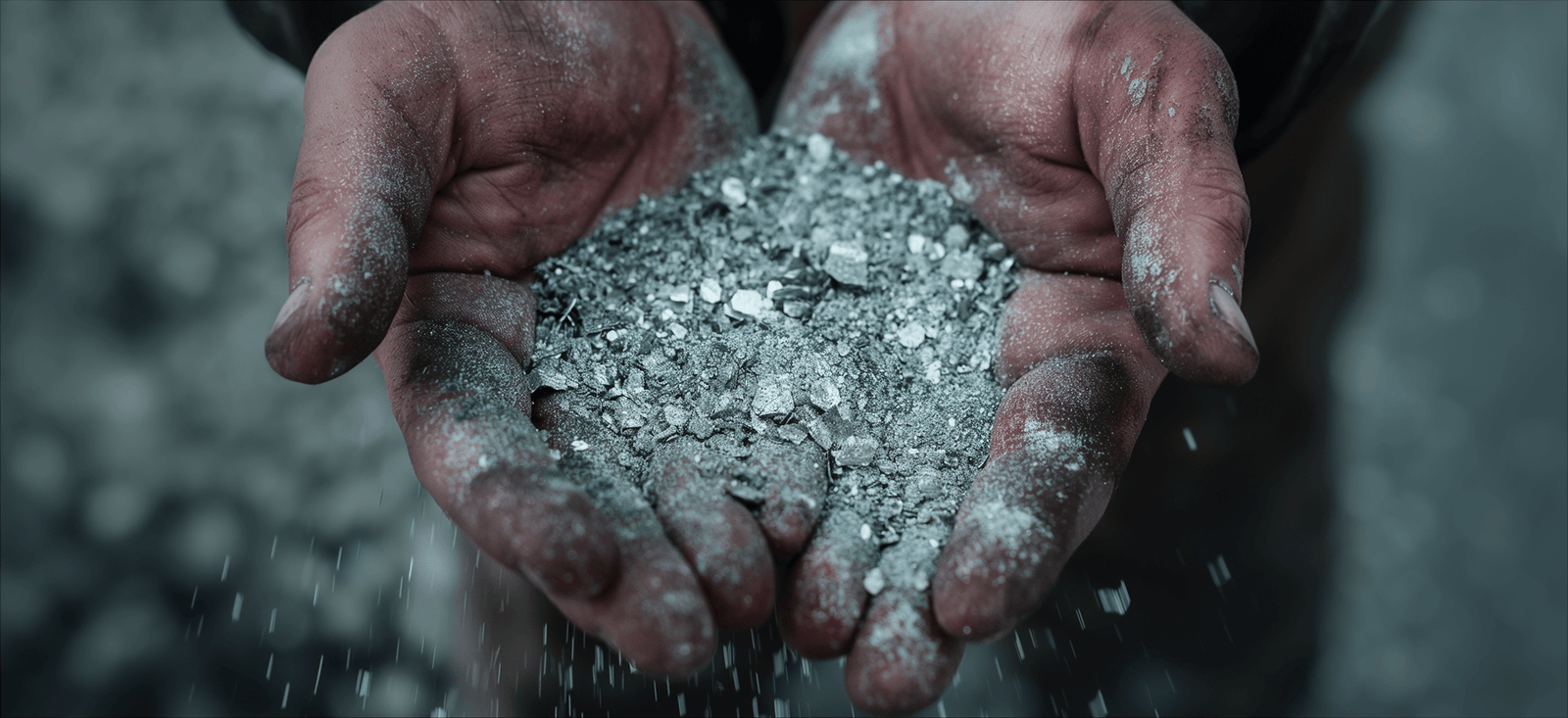
Black mass is the result of breaking down spent batteries into a fine powder that contains:
- Lithium
- Cobalt
- Nickel
- Manganese
- Graphite (carbon anode)
- Binders, electrolyte residues, and minor metals
This black mass becomes a recyclable commodity — and is increasingly traded, particularly in the EU and China.
What Happens to the Carbon Anode?
While most recycling processes focus on recovering metals, graphite is often:
- Burned off during pyrometallurgical treatment, or
- Contaminated with binder residue and fluoride salts in hydrometallurgical methods
As a result, carbon typically does not return to the battery supply chain — yet.
Can Carbon Be Reused? Yes — But with Challenges
Reclaiming carbon from black mass is a growing area of research. Key challenges include:
- Purity: Spent graphite is often coated with SEI (solid electrolyte interphase), binders, and degradation products.
- Structural damage: Repeated charging cycles degrade graphite’s crystallinity.
- Cost: Purification and reprocessing are energy- and labor-intensive.
That said, several companies (e.g. Ascend Elements, Cirba Solutions) are piloting graphite recovery and regraphitization, with promising early results.

The Case for Recycled Graphite
Why pursue recycled graphite at all?
- Sustainability: Reduces demand for energy-intensive synthetic graphite
- Security: Diversifies supply away from critical dependencies (e.g. China)
- Circularity: Enables a closed-loop material system
The European Commission has included natural and synthetic graphite in its list of critical raw materials (CRM) — making recovery a strategic imperative.
What’s Next?
As battery manufacturing scales up, recycled graphite could provide up to 20% of the EU’s anode material supply by 2035, according to the European Battery Alliance (EBA, 2023).
To enable this:
- Recycling processes must evolve to preserve and purify carbon
- Collection infrastructure must improve
- Policy and market signals must support recycled material integration
Conclusion
While carbon has traditionally been the “invisible” material in battery recycling, that’s changing. Graphite — once discarded — is now recognized as a valuable, reusable resource in the transition to a sustainable battery ecosystem.
The future of batteries will be circular — and carbon must be part of that loop.
Sourcing carbon materials or black mass feedstocks?
Contact Prime Elements — your partner in sustainable battery-grade supply chains.