Calcined Petroleum Coke in Europe: From Carbon Raw Material to Compliance-Sensitive Supply Chain Input
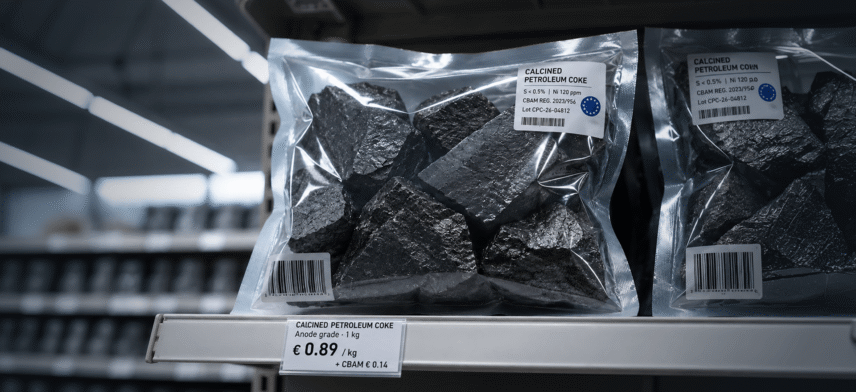
Calcined petroleum coke (CPC) sits at an unusual intersection of industrial necessity and regulatory complexity. It is the primary carbon material used in the manufacture of prebaked anodes for primary aluminium smelting – an application where neither volume nor quality can easily be compromised. At the same time, the European regulatory environment around the aluminium supply chain has shifted substantially in the past two years, with the Carbon Border Adjustment Mechanism (CBAM) transforming CPC from a commodity input into a compliance-sensitive supply chain decision.
What Calcined Petroleum Coke Is – and Why Quality Matters
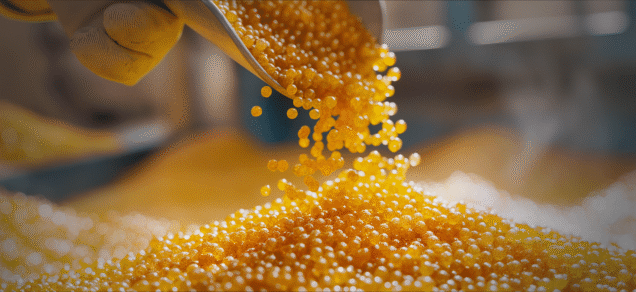
A solid grounding in key petroleum coke terminology helps when navigating the CPC market. Petroleum coke is a carbon-rich solid by-product of the oil refining process. ‘Green’ (uncalcined) petroleum coke is produced in delayed cokers at refineries and contains volatile matter, moisture, and metallic impurities. Calcination – heating green coke above 1,200 °C – removes the volatiles, increases crystallinity, and raises the real density of the carbon, producing CPC suitable for anode manufacture.
For anode-grade CPC, specifications are tight: real density typically above 2.04–2.06 g/cm³, sulphur content matched to smelter anode recipe requirements (often below 3 % for European smelters), and controlled vanadium and nickel levels to manage smelter off-gas environmental performance. Real density test methods for CPC are a technically critical aspect of quality control, directly correlating with the electrical conductivity and mechanical performance of the finished anode.
The Aluminium Nexus: European Smelters as CPC Buyers
European aluminium smelters – primarily located in Norway, Iceland, France, Germany, the Netherlands, and Spain – collectively represent one of the world’s most technically demanding CPC consumer markets. These smelters typically consume between 400 and 500 kg of CPC per tonne of primary aluminium produced, with the exact figure depending on anode bake quality and cell technology.
European smelter anode plants blend CPC from multiple origins and sulphur grades to optimise anode recipe performance. This creates differentiated demand: low-sulphur CPC (below 2 %) commands a premium and is sourced from sweet crude-derived green coke (US Gulf Coast or Middle Eastern origin), while mid-sulphur grades from Russian or Central Asian calcination plants – now subject to supply restrictions – have been partly replaced by alternative origins.
CBAM: From Abstract Regulation to Commercial Reality
The Carbon Border Adjustment Mechanism entered its transitional phase in October 2023 and moved to the definitive phase in January 2026. A dedicated analysis of CBAM’s impact on petcoke buyers in 2026 sets out the practical compliance obligations in detail. CBAM currently covers aluminium among other sectors. For CPC buyers and aluminium producers, this creates a layered compliance obligation:
- Primary aluminium imports into the EU now carry a CBAM certificate obligation based on the embedded carbon intensity of the production process.
- The carbon intensity of aluminium smelting depends partly on the electrode carbon consumed – which links back to CPC quality and origin documentation.
As detailed in our analysis of CBAM certificate prices for Q1 2026 and their impact on aluminium and cement, the embedded carbon cost in imported aluminium has become a meaningful procurement line item. For CPC traders and buyers, origin and quality traceability are no longer just operational preferences – they are compliance inputs.
Supply Chain Implications: Calcination as a Geographic Bottleneck
The calcination step itself is a geographic bottleneck. Calcination capacity is concentrated in specific regions: the US Gulf Coast, the Middle East (Saudi Arabia, UAE), China, and historically Russia and the CIS. European aluminium smelters are net importers of CPC, with no significant domestic calcination capacity.
Changes in calcination capacity availability – whether due to refinery shutdowns affecting green coke supply, environmental restrictions on calcination plants, or geopolitical risk – feed directly into CPC spot and contract market tightness. The 2023–2024 period saw notable tightness driven by US Gulf Coast green coke supply constraints and elevated demand from Chinese CPC exports rebounding.
What the Market Looks Like in 2025–2026
- Low-sulphur CPC premium: European smelters’ preference for sub-2 % sulphur CPC supports sustained premiums for US Gulf Coast and Middle Eastern calcined product.
- Russian-origin displacement: sanctions-related restrictions continue to push European buyers toward alternative origins, with logistics and lead-time implications.
- CBAM documentation requirements: increasing demand for carbon footprint data is raising the administrative barrier for less transparent suppliers.
- Green coke availability: refinery rationalisations in Europe and the US affect the supply of high-quality anode-grade green coke, the feedstock for premium CPC.
How Prime Elements Can Help
Prime Elements provides regular market updates through our calcined petroleum coke operational updates. Our team sources anode-grade and specialty CPC from qualified calcination plants across the US Gulf Coast, Middle East, and other origins, with full documentation support for CBAM compliance needs. Contact us to discuss your CPC supply requirements and quality specifications.