Naphtha in Europe: Feedstock Flexibility in a Restructuring Petrochemical Market

Key message: Feedstock flexibility can improve resilience, but naphtha, liquefied petroleum gas (LPG) and ethane are not commercially or technically interchangeable on a one-to-one basis. Cracker configuration and the desired output slate differ, so a switch that looks attractive on feedstock cost alone can change the entire product mix a plant produces.
Continuing our series on physical commodities and the specifications that govern them, this article looks at naphtha as a steam-cracker feedstock in a European petrochemical industry that is under significant structural pressure. The wider context matters: global petrochemical capacity growth is shifting increasingly to the United States, the Middle East and Asia, and European operators are re-examining which feedstocks, and which crackers, remain economic.
Why naphtha remains important in Europe
European steam crackers have historically relied on naphtha to a far greater degree than their counterparts in North America or the Middle East. This is not an accident of preference. It reflects the structure of the European energy and refining system and the co-product economics that naphtha cracking supports.
Three points explain naphtha’s continuing role.
- A high share of naphtha-fed steam crackers. Much of the European ethylene fleet was designed and optimised around liquid feedstocks, with naphtha as the reference feed. The furnaces, separation trains and downstream units were built to handle the heavier, more complex product stream that naphtha produces.
- A close connection to the refinery system. Naphtha is a refinery stream, and the European petrochemical sector has long been integrated, physically and commercially, with regional refineries. Naphtha can be directed to steam cracking, to catalytic reforming, to gasoline blending or to aromatics production depending on relative margins, which gives it a role as a flexible refinery cut rather than a single-purpose feedstock.
- A broader co-product slate. Compared with lighter feedstocks, naphtha cracking yields a wider range of valuable co-products alongside ethylene, including propylene, C4 hydrocarbons (the butadiene and butylene fraction), pyrolysis gasoline (pygas) and aromatics precursors. For a producer whose downstream units depend on propylene, butadiene or benzene, that richer slate is part of the reason naphtha is used in the first place.
That last point is central to the whole discussion of flexibility. A cracker is rarely valued only for its ethylene. The co-products it generates, and the downstream units that consume them, shape what any feedstock switch would actually cost.
The current restructuring
The European chemical industry is going through a period of rationalisation, and naphtha demand cannot be read in isolation from it. Several pressures are acting at once.
- Weak downstream demand. Demand for many polymers and intermediates has been subdued, reducing cracker operating rates and margins across the region.
- Global overcapacity. Large volumes of new ethylene and derivative capacity have been commissioned in other regions. This added supply weighs on global prices and leaves higher-cost producers exposed.
- Higher European energy and operating costs. Energy and utility costs in Europe have generally been elevated relative to the United States and the Middle East. Because steam cracking is energy-intensive, this cost gap directly erodes the competitiveness of European crackers.
- Cracker closures and rationalisation. Several operators have announced closures, conversions or reduced run rates. The fleet that remains is increasingly the more integrated and efficient sites, while marginal capacity is withdrawn.
- Growing dependence on imported petrochemical products. As domestic capacity is rationalised, Europe increasingly imports finished and intermediate petrochemical products rather than producing them locally from naphtha. This shifts part of the value chain, and part of the associated feedstock demand, outside the region.
The result is a market in transition rather than a market in simple decline. Naphtha remains important to the crackers that continue to run, but the volume base is being reshaped by these structural forces, and buyers should treat the direction of that change as an ongoing thing to monitor rather than a settled outcome.
Naphtha versus ethane and LPG
The case for feedstock flexibility usually starts with cost. When ethane or LPG is cheap relative to naphtha, a cracker able to take lighter feed can lower its feedstock bill. But feedstock cost is only one variable. The yield structure and the co-product slate differ substantially between feeds, and those differences are what make the comparison more complicated than a simple price spread.
The table below summarises qualitative tendencies only. Actual yields depend on the specific feed, furnace design and operating severity, and precise figures should be taken from plant data rather than assumed.
| Feedstock | Typical ethylene yield tendency | Co-product richness | Feedstock flexibility of a typical cracker |
| Ethane | Highest ethylene selectivity; product stream dominated by ethylene | Low; limited propylene, C4s and aromatics | Low; ethane crackers are generally configured narrowly for light feed |
| LPG (propane / butane) | Intermediate ethylene yield; more propylene than ethane | Moderate; more propylene and C4s than ethane, less than naphtha | Moderate; some crackers can co-feed LPG with naphtha within limits |
| Naphtha | Lower ethylene fraction; broader spread across products | High; significant propylene, C4s, pygas and aromatics | Higher slate flexibility, but tied to liquids-capable equipment |
A few observations follow from this.
- Ethylene yield. Lighter feeds tend to convert a larger share of the feed to ethylene. This is attractive if ethylene is the target, but it comes at the expense of the heavier co-products.
- Propylene and C4 yield. Naphtha and, to a lesser degree, LPG generate more propylene and C4 hydrocarbons than ethane. A producer whose downstream depends on propylene or butadiene cannot simply switch to ethane without losing feed to those units.
- Aromatics and pygas. Naphtha cracking produces pygas and aromatics precursors that lighter feeds largely do not. Where these streams have value, they form part of the economic case for naphtha.
- Required cracker configuration. Ethane and naphtha crackers are not the same machine. Furnace design, residence time, separation and co-product handling all differ, which limits how freely a given plant can move between feeds.
- Contract and logistics availability. Even where a switch is technically possible, the lighter feedstock must be reliably available under contract and deliverable to the site. Ethane in particular depends on specialised supply chains and infrastructure that are not uniformly present in Europe.
Why switching is not straightforward
Feedstock flexibility is often described as a single lever a plant can pull. In practice it is constrained by the physical plant and by the value of what the cracker produces. The main constraints are the following.
- Physical equipment limitations. Cracking furnaces, transfer-line exchangers and the separation train are designed around a feedstock range. A cracker built for naphtha cannot necessarily process large volumes of ethane, and a light-feed cracker cannot readily take naphtha, without capital modification.
- Feedstock pretreatment. Different feeds require different handling and pretreatment upstream of the furnaces. Liquid and gaseous feeds are not prepared or vaporised in the same way.
- Furnace operating conditions. Residence time, temperature profile and steam-to-hydrocarbon ratio are tuned to the feed. Changing feed changes the required operating conditions and the coking behaviour of the furnaces.
- Downstream integration. A cracker feeds propylene, butadiene, benzene and other streams to downstream units. Reducing those co-products by switching to a lighter feed can starve integrated units that were built around the naphtha slate.
- Co-product value. The economics of a switch must account for the co-products gained or lost, not only the ethylene and the feedstock price. A cheaper feed that removes valuable propylene or aromatics may not improve the overall margin.
- Availability of storage and terminal infrastructure. Handling ethane or LPG requires appropriate storage, refrigeration and terminal access. Where that infrastructure is absent, flexibility is theoretical rather than real.
The honest summary is that flexibility exists on a spectrum. Some integrated sites can co-feed a proportion of LPG alongside naphtha and adjust within a range. Wholesale substitution between naphtha and ethane, by contrast, is a capital and infrastructure question, not an operating decision that can be taken feedstock cargo by feedstock cargo.
Quality parameters for naphtha
Where naphtha is used, its quality determines how it performs in a steam cracker and how much of the desired product slate it yields. Naphtha is not a single uniform commodity, and the following parameters should be defined and controlled rather than assumed.
- Density. An indicator of the overall character of the cut and a routine control parameter used alongside the distillation profile.
- Boiling range. The distillation range defines whether the material is a light or heavy naphtha and affects both cracker behaviour and suitability for reforming or blending. Boiling range should be specified, not left open.
- Paraffinic versus aromatic composition. The balance of paraffins, naphthenes and aromatics strongly influences ethylene yield. Paraffinic naphtha is generally preferred for ethylene crackers because it tends to give higher ethylene yields, whereas more aromatic or naphthenic material behaves differently and may be directed to other uses.
- Sulfur. Sulfur content matters for both cracking and downstream processing and for meeting the requirements of specific applications. It is a core specification parameter.
- Olefins. Olefin content affects stability and processing behaviour and is normally controlled for feedstock naphtha.
- Chlorides and other contaminants. Chlorides and trace contaminants can cause corrosion and fouling and can damage downstream catalysts, so their control is important even at low levels.
- Lot consistency. Consistent quality from cargo to cargo allows a cracker to hold stable operating conditions. Variability in composition forces operational adjustment and can undermine yield planning.
Prime Elements positions naphtha for steam cracking, reforming, gasoline blending and aromatics production, with attention to control of boiling range, sulfur and composition so that the material matches the intended application rather than being treated as a single generic grade.
Logistics and supply resilience
Naphtha supply in Europe combines local refinery production with imported volumes, and the balance between the two has consequences for resilience.
- Refinery-origin versus imported naphtha. Naphtha produced by European refineries is closely linked to regional refinery runs and maintenance. Imported naphtha broadens the supply base but introduces exposure to freight, route and origin risk.
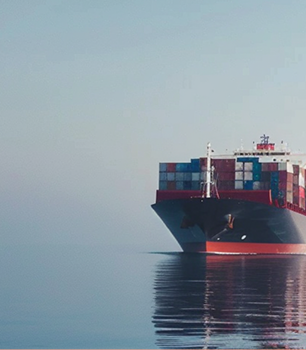
- Vessel and barge deliveries. Naphtha moves by seagoing vessel over longer distances and by barge within regional systems such as inland waterways. Each mode has its own availability and cost dynamics.
- Terminal access. Reliable supply depends on access to storage and terminal capacity at the right locations. Terminal availability can become a constraint in tight markets.
- Middle East and Mediterranean supply exposure. Import flows into Europe draw on Middle Eastern and Mediterranean sources, so European buyers carry exposure to conditions in those supply regions.
- Freight and geopolitical route risks. Freight rates and the security of key maritime routes affect delivered cost and reliability. Geopolitical disruption to shipping routes is a live risk that can move the economics of imported naphtha quickly.
Supply resilience, in other words, is not only a question of price. It is a question of where the naphtha originates, how it is delivered and whether the terminal and logistics chain behind it can be relied on.
What buyers should monitor
Rather than fixed price levels, the following indicators help buyers read the naphtha market and the feedstock-flexibility question over time.
- The naphtha crack, meaning naphtha’s value relative to crude.
- Naphtha versus propane and butane differentials, which drive the incentive to co-feed or switch toward LPG.
- European cracker run rates as a signal of feedstock demand.
- Planned and unplanned cracker shutdowns.
- Refinery maintenance schedules, which affect regional naphtha production.
- Petrochemical import flows, as a measure of how much production is moving outside Europe.
- Freight rates and terminal availability along the relevant supply routes.
Conclusion
Feedstock flexibility can improve resilience, but it should not be overstated. Naphtha, LPG and ethane are not interchangeable on a one-to-one basis, either commercially or technically. Cracker configuration differs, the desired output slate of ethylene, propylene, C4s, pygas and aromatics differs, and the equipment, pretreatment, downstream integration and infrastructure behind each feed all constrain how freely a plant can switch. In a European market under real structural pressure, and against capacity growth concentrated in the United States, the Middle East and Asia, naphtha remains important to the crackers that keep running, precisely because of the broad co-product slate that makes any switch away from it a more complex decision than feedstock price alone suggests.
Prime Elements sources naphtha for steam cracking, reforming, gasoline blending and aromatics production, working with buyers to align specifications to the intended use, with control of boiling range, sulfur and composition, independent sampling and inspection, audit-ready documentation and reliable delivery. The aim is to match the grade to the process rather than to treat naphtha as an undifferentiated commodity.