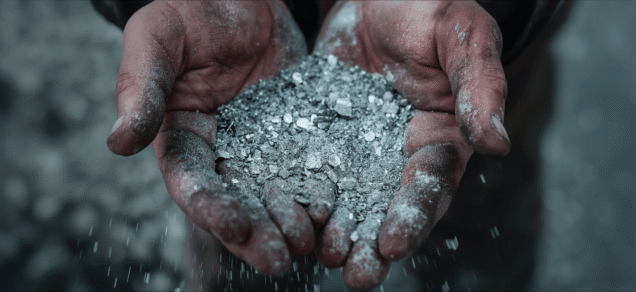
A Certificate of Analysis Is Only as Good as the Sample

The laboratory measures the sample. It does not prove that the sample represents the cargo. Representative sampling is one of the most underappreciated elements of physical commodity trading, and a technically correct Certificate of Analysis (COA) drawn from an unrepresentative sample can be commercially and contractually misleading.
Continuing our technical series on quality and execution in physical commodity trading, this article looks at a step that sits upstream of every laboratory report: how the sample was taken. Across fats and vegetable oils, liquid hydrocarbons, oilseeds and meals, petroleum coke and other dry bulk, and packaged cargoes, the discipline of representative sampling frequently determines whether a COA describes the cargo or merely describes a portion of it.
Why a correct laboratory result can still be commercially wrong
A modern laboratory can measure a sample with high precision and full traceability, and the resulting figures can be entirely accurate for the material placed in front of it. The commercial problem arises when that material is not representative of the bulk it is supposed to characterise.
A sample can be accurate but unrepresentative. If a portion of oil is drawn from a single point in a large shore tank, the free fatty acid or moisture figure returned by the laboratory is correct for that portion. It is not automatically correct for the 5,000 tonnes around it.
Several physical mechanisms cause the material in a lot to vary from point to point:
- Stratification. Liquids of differing density, temperature or water content can separate into layers. The top, middle and bottom of a tank may carry measurably different quality.
- Sediment and free water. Solids and water tend to settle to the bottom of tanks, tank cars and drums. A sample taken above the sediment layer can understate impurities; a bottom sample can overstate them.
- Contamination. Residues from a previous cargo, tank coatings, rust or handling equipment may affect only part of the parcel.
- Particle-size segregation in dry cargoes. During loading, conveying and stockpiling, coarse and fine particles separate. Fines migrate and concentrate, so a grab from the surface of a hold or stockpile may differ significantly in size distribution, moisture and ash from the material beneath it.
The consequence is that quality is rarely uniform, and a single spot measurement should not automatically be treated as the quality of the lot. Representative sampling exists to characterise the whole, not a convenient part of it.
Sampling terminology
Sampling has a precise vocabulary, and disputes often arise because parties use the same words to mean different things. The following terms are widely used across product groups.
- Increment (or spot sample). A single quantity of material taken from the lot in one operation, at one location and one moment. A spot sample from a defined depth or point is one form of increment.
- Composite sample. A sample formed by combining several increments taken from different positions in the lot, so that the combined material better reflects the whole.
- Running sample. A sample collected continuously or at intervals while the product is in motion, for example throughout the loading or discharge of a tank, so that the sample spans the full transfer rather than a single instant.
- Laboratory sample. The reduced, homogenised quantity prepared from the gross or composite sample and actually sent to the laboratory for analysis. Sample reduction and splitting must preserve representativeness.
- Retained (or referee) sample. A sealed, labelled portion set aside and stored so that the material can be re-examined later, typically by an independent or referee laboratory in the event of a dispute.
- Contractual sample. The sample defined by the governing contract as the basis for determining quality and, where applicable, for settling claims. Grain and Feed Trade Association (GAFTA) contracts, for example, contain their own rules governing how contractual samples are drawn, sealed and held.
The distinction between these terms is not academic. A COA based on a single increment answers a narrower question than one based on a properly constituted composite or running sample.
Different products require different approaches
There is no single correct way to sample everything. The physical state of the product, how it stratifies or segregates, and the parameters at stake all shape the method. Specialised methods exist for fats and vegetable oils, separate standards apply to liquid hydrocarbons, and dry bulk products have their own conventions.
Vegetable oils and animal fats
Liquid fats and oils can stratify by temperature, moisture and impurity content, and some fractionate or partially solidify on cooling. Sampling normally requires the product to be liquid and homogeneous, which may mean circulation or controlled heating before sampling, and the use of zone samplers able to draw from upper, middle and lower levels of a tank. Specialised sampling procedures for fats and vegetable oils address these behaviours; the underlying aim is to obtain material representative of the whole parcel rather than a warm or cool layer within it.
Liquid hydrocarbons
Naphtha, petrochemicals and other liquid hydrocarbons are governed by their own family of sampling standards, reflecting concerns such as vapour loss of volatile components, the need for closed or restricted sampling systems for safety and accuracy, and the settling of free water and sediment. Sample temperature, container type and the choice between spot, running and composite methods all bear directly on the reliability of the reported result.
Oilseeds and meals
Oilseeds, meals and similar granular commodities are prone to segregation and to moisture variation across a lot. Representative sampling relies on taking a sufficient number of increments distributed across the parcel, whether from a moving stream during loading or from multiple positions and depths in storage. For traded lots, GAFTA contracts set out their own requirements for how contractual samples are to be taken and handled.
Petroleum coke and other dry bulk products
Green petroleum coke (GPC), calcined petroleum coke (CPC) and other dry bulk materials segregate by particle size during handling, and moisture is often unevenly distributed. Stream sampling from a moving belt, taken as many increments across the full duration of loading or discharge, is generally more representative than grab sampling from the surface of a hold or stockpile. The number and distribution of increments, and correct sample reduction, are central to a defensible result.
Packaged cargoes and big bags
For packaged product, drums, small bags and big bags (flexible intermediate bulk containers), the lot is divided into discrete units. Representativeness depends on selecting a sufficient number of units across the consignment and, where the material within a unit may itself vary, sampling at more than one depth. Sampling only the most accessible bags at the door of a container is a common source of unrepresentative results.
Where sampling commonly fails
Most sampling failures are procedural rather than analytical. The laboratory is rarely at fault; the sample was compromised before it arrived. Recurring failure modes include:
- Sampling only from an accessible hatch or point. Convenience sampling from one hatch, one manhole or the front of a container ignores variation elsewhere in the lot.
- Sampling before homogenisation. Drawing a sample from a stratified tank that has not been circulated, or a segregated pile that has not been mixed, captures a layer rather than the whole.
- Wrong sample temperature. Sampling fats or hydrocarbons at the wrong temperature can change what is captured, through partial solidification, phase separation or loss of volatile components.
- Dirty equipment. Samplers, containers and lines carrying residues from a previous product introduce contamination that the laboratory will faithfully measure.
- Insufficient number of increments. Too few increments cannot span the variability of a large lot, however carefully each one is taken.
- Unrecorded sample splitting. Reducing a gross sample to a laboratory portion without recording how it was split breaks the link between the analysed material and the cargo, and cannot be reconstructed later.
- Incorrect storage after sampling. Poorly sealed, mislabelled or badly stored samples degrade, absorb moisture, lose volatiles or become impossible to attribute reliably to the lot.
Any one of these can produce a COA that is internally correct and commercially wrong.
Independent inspection and chain of custody
For traded cargoes, sampling is normally entrusted to an independent inspection company precisely so that the result does not depend on the word of either party. The value of independent inspection lies as much in the chain of custody as in the sampling itself. A defensible chain of custody typically includes:
- Appointment of the surveyor. A recognised, mutually accepted inspector is nominated, ideally before loading or discharge and in line with the contract.
- Joint sampling. Where practical, sampling is witnessed by, or conducted jointly with, representatives of both parties, reducing later dispute over how it was done.
- Seal numbers. Sample containers are sealed and the seal numbers recorded, so that any tampering is evident.
- Sample labels. Each container is labelled with the vessel or lot identity, product, sampling point, date and reference to the applicable method.
- Photographic records. Photographs of the sampling operation, seals and labels support the documentary record.
- Handover to the laboratory. The transfer of samples is documented, preserving the link between what was sampled and what was tested.
- Audit trail. The complete record, from appointment to analysis, allows the result to be reconstructed and defended.
An unbroken chain of custody is what allows a bank, an auditor or a counterparty to rely on a COA without having witnessed the sampling personally.
Retained samples and claims
Sampling also underpins the ability to make or defend a claim. Because quality can be contested weeks after delivery, sealed retained samples are the physical record of what was actually shipped or received. Points that should be defined before, not after, a dispute include:
- Number of sample sets. Typically more than one sealed set is drawn, so that separate portions are available for the buyer, the seller and a referee.
- Storage conditions. Retained samples must be held under conditions that preserve the relevant parameters, protected from heat, light, moisture and contamination.
- Retention period. A defined period during which samples are kept, aligned with the window in which claims may be raised.
- Right to re-test. The contract should establish who may request re-analysis, and on which retained set.
- Referee laboratory. A named or agreed independent laboratory whose result is decisive where the parties’ figures differ.
- Contractual consequences of inconsistent sampling. Where sampling did not follow the agreed method or chain of custody, the resulting figures may carry little weight, however precise the laboratory work.
The table below summarises how the purpose of a sample shapes the way it should be handled.
| Sample type | Primary purpose | Handling priority |
| Increment / spot | Characterise one point in the lot | Record exact location and depth |
| Composite | Represent the whole lot | Combine increments in correct proportion |
| Running | Span a full transfer over time | Sample throughout loading or discharge |
| Laboratory | Provide the tested portion | Preserve representativeness during reduction |
| Retained / referee | Enable later re-test | Seal, label and store under defined conditions |
| Contractual | Determine quality and settle claims | Follow the governing contract precisely |
Practical checklist before loading or discharge
Before a cargo is loaded or discharged, the sampling arrangements should be settled explicitly rather than assumed. The following questions are a useful discipline:
- Which standard applies? Which sampling method or contractual regime governs this product and this trade, and is it named in the contract?
- Who appoints the inspector? Is the independent surveyor mutually agreed, and appointed in time to attend the operation?
- At what point is quality final? Is quality determined at load port, at discharge, or both, and on which sample?
- Who receives the sample sets? How many sealed sets are drawn, and to whom are they distributed?
- Which test method prevails? Where more than one analytical method exists for a parameter, which one is contractually decisive?
- What happens if results differ? What is the agreed referee procedure if the buyer’s and seller’s figures disagree?
Answering these questions in advance is far cheaper than resolving them during a dispute.
Conclusion
The laboratory measures the sample. It does not prove that the sample represents the cargo. A Certificate of Analysis is only as good as the sample behind it, and the sample is only as good as the method, the increments, the chain of custody and the storage that produced it.
This is a credibility topic rather than a product topic. For banks financing a cargo, auditors reviewing a transaction, industrial buyers relying on a specification and counterparties settling a claim, disciplined sampling is direct evidence of quality of execution. It does not sell a grade of oil or a tonne of coke; it demonstrates that the figures attached to them can be trusted.
Independent inspection, representative sampling, quantity control and audit-ready documentation are part of Prime Elements’ operating model. Across fats and vegetable oils, liquid hydrocarbons, oilseeds and meals, petroleum coke and other dry bulk, and packaged cargoes, the company works with recognised independent inspectors and laboratories to agree the applicable sampling method, chain of custody and referee procedure before loading or discharge, so that each Certificate of Analysis rests on a sample that genuinely represents the cargo.